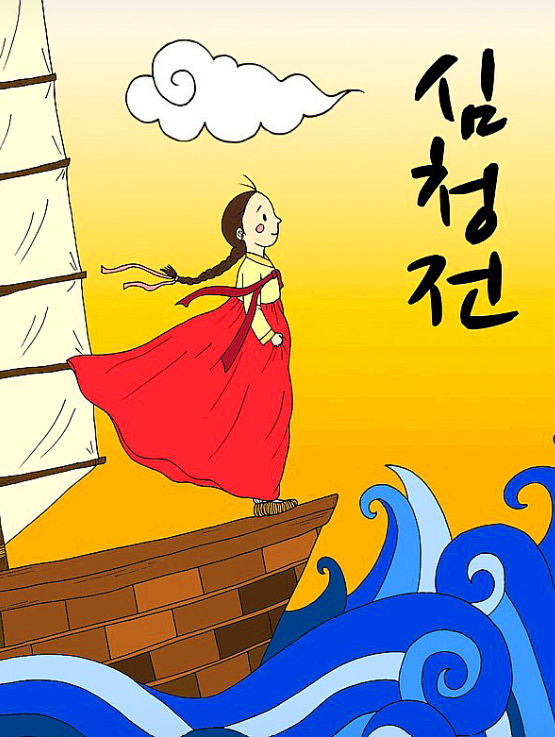
🌸 Simcheongjeon (沈淸傳): A Symbol of Filial Piety, a Touching Classic 💖
Simcheongjeon is considered a representative work of Pansori-gye Novels among Korean classical literature. 📚✨ This story, which prominently features 'filial piety (孝)' as its central theme, tells the deeply moving tale of Sim Cheong, a daughter of immense devotion, who sacrifices herself for her blind father and eventually finds happiness, reuniting with him. 😭💞 It has been consistently loved by Koreans for centuries, resonating deeply within their hearts. 🌟
1. 👥 Main Characters at a Glance!
The story of Simcheongjeon unfolds through the relationships and experiences of its distinct characters. 👀
- Sim Cheong (沈淸) 👧:
- The protagonist of the story and the epitome of a devoted daughter! 💖
- Possesses profound filial piety, caring meticulously for her blind father.
- A self-sacrificing figure who willingly offers her life to help her father regain his sight. 🌊
- As a reward, she eventually becomes an Empress 👑 and reunites with her father, completing her filial duty.
- Sim Hak-gyu (沈學奎) (Sim Bongsa) 👴:
- Sim Cheong's father. 😢 He is blind.
- Lives in poverty and misfortune, but occasionally shows careless and selfish traits (e.g., rashly promising the monk 300 seok of rice), revealing his human flaws. 🤦♂️
- Nevertheless, his love for his daughter is sincere, and he miraculously regains his sight thanks to her sacrifice. ✨
- Mong-eunsa (夢恩寺) Monk 🧘♂️:
- Appears suddenly when Sim Bongsa falls into a pond, telling him that he can regain his sight if he donates 300 seok of rice to the temple. 🗣️
- This monk's single statement triggers the tragic beginning of the entire story. 🔔
- Sailors/Merchants (선인들) ⚓:
- Merchants who were seeking a human sacrifice (offering) for the dragon god of the sea. 💰
- They buy Sim Cheong and take her to Indangsu, but they also feel human sympathy for her filial piety and plight. 🥺
- Dragon King (龍王) 🐉:
- A mystical being who saves Sim Cheong from death after she throws herself into Indangsu and takes her to the Dragon Palace to care for her! 🧜♀️
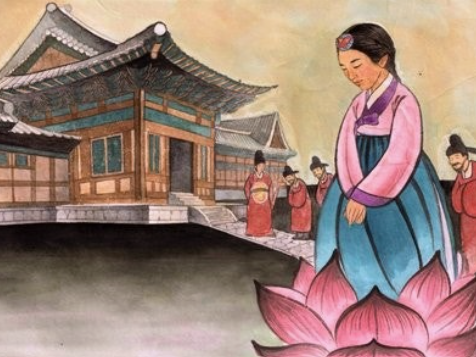
- Moved by Sim Cheong's deep filial devotion, he sends her back to the human world inside a lotus flower. 🌸
- Emperor (皇帝) 👑:
- Discovers the mysterious lotus flower from the Dragon Palace and finds Sim Cheong within it. 🤩
- Impressed by her noble demeanor and touching story, he takes her as his Empress! Sim Cheong's savior who opens up a new life for her. 💖
2. 📜 What is Simcheongjeon about? (Plot Summary)
Shall we follow the poignant yet beautiful journey of Simcheongjeon? 🎢
- A Tragic Beginning... Sim Bongsa's Suffering 😥:
- Sim Bongsa, who couldn't see, and his young daughter Sim Cheong lived in extreme poverty.
- Despite her young age, Sim Cheong was exceptionally devoted and managed their difficult household. 🏡
- A Rash Promise! The Encounter with the Monk 🙏:
- One day, Sim Bongsa accidentally fell into a pond and was struggling.
- A Mong-eunsa monk suddenly appeared and told him that if he donated 300 seok of offering rice to the temple, he would regain his sight. 👀
- In his desperate desire to see, Sim Bongsa rashly promised the donation without considering his circumstances. 🤦♂️
- Daughter Sim Cheong's Resolute Decision 💔:
- With no way to acquire the 300 seok, Sim Cheong fell into deep despair. 😔
- Then, she heard news that the sailors of Indangsu were looking for a human sacrifice for the sea god.
- Believing this to be the only way for her father to regain his sight, Sim Cheong made a determined decision to sell herself to raise the 300 seok. 💸
- Towards Indangsu... And the Sacrifice 🌊:
- Following the sailors, Sim Cheong finally arrived at Indangsu.
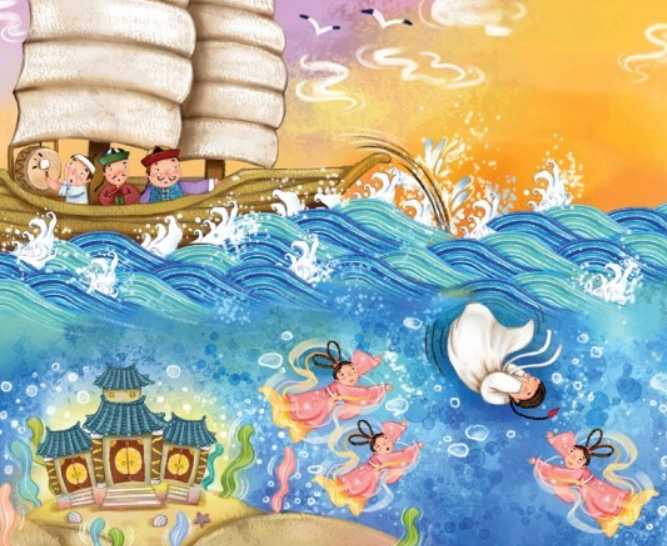
- After bidding her father a final farewell, and holding onto the hope that her father would regain his sight, she bravely threw herself into the deep sea. 😭
- A Miracle! Salvation in the Dragon Palace 🐉:
- But surprisingly! Sim Cheong did not die after plunging into the sea! 😲
- She was led to the Dragon Palace and received warm care from the Dragon King. The Dragon King was deeply moved by Sim Cheong's filial piety. ✨
- Sim Cheong Becomes Empress, Returns on a Lotus Flower 🌸👑:
- Moved by Sim Cheong's devotion, the Dragon King placed her inside a large lotus bud and sent her back to the human world.
- The Emperor, who discovered this mysterious lotus flower, found Sim Cheong inside it! 🤩
- Impressed by her noble demeanor and touching story, he took her as his Empress! 🎉
- Searching for Her Father! The Blind Men's Feast 🎊:
- Even as an Empress, Sim Cheong could not forget her father and longed for him. 🥺
- To find her father, she hosted a grand feast, inviting all blind people from across the eight provinces to the palace. 🥳
- The Most Touching Reunion in the World! ✨:
- Sim Bongsa, despite his poverty and ailing body, also attended the feast. 🚶♂️
- When the Empress began to recount her story at the feast, Sim Bongsa immediately realized it was the story of his own daughter, Sim Cheong!
- The moment he cried out, "Cheong-ah!", Sim Bongsa's two eyes opened wide! He experienced a miracle! 🤩
- Towards Eternal Happiness! A Happy Ending 💖:
- Thus, Simcheongjeon comes to a happy ending. Sim Bongsa lives the rest of his life comfortably under his daughter's care, and Sim Cheong becomes an eternally praised figure for her extreme filial piety. 💫
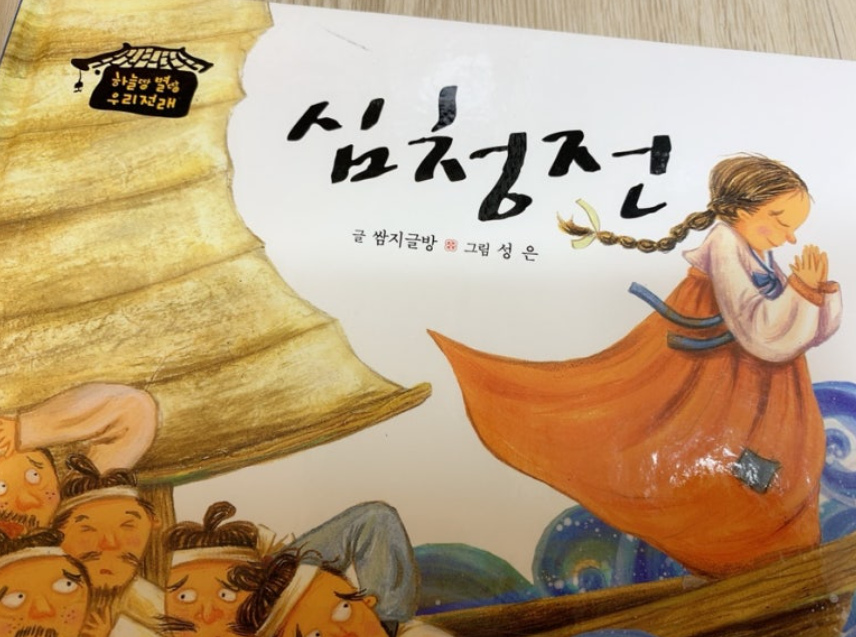
3. 📜✨ What Message Does Simcheongjeon Give Us? (Themes & Ideas)
Simcheongjeon is more than just an old tale; it conveys profound meanings and lessons. 🤔
- Filial Piety (孝): The Highest Form of Love! 💖:
- This is the most central theme of Simcheongjeon, and the reason it has been loved across generations!
- Sim Cheong's self-sacrificing demeanor, even willing to give her life, demonstrates the ultimate extent of filial piety, a most crucial value in Confucian society. 🙏
- This presents not just a moral lesson, but an ideal human image that people of that era aspired to.
- Gwonseonjingak (勸善懲惡 - Reward for Good, Punishment for Evil): Good Deeds Bring Blessings! 💪:
- The traditional idea of encouraging good and punishing evil is strongly evident in the story.
- Sim Cheong's extreme filial piety ultimately results in blessings from the Dragon King and her becoming Empress, while Sim Bongsa also experiences the miracle of regaining his sight. ✨
- This is rooted in the Ingwabo (因果應報 - Karma) belief that heaven bestows blessings upon the virtuous and punishment upon the wicked.
- Fatalistic Worldview: Blessings After Hardship! 🌌:
- The idea that Sim Cheong's immense suffering and subsequent happiness are not merely coincidental, but rather her filial piety is part of a preordained destiny according to heaven's will (providence), is reflected.
- This worldview helped the common people of the time not lose hope even in harsh realities. 💫
- Human Desire and Social Critique: Not Everyone Is Perfect 😔:
- Sim Bongsa's blind desire to see, and the sailors' selfish demand for a human sacrifice, reveal human weakness and desire.
- The reality of having to sell one's daughter due to poverty can also be interpreted as an indirect critique of the suffering of the common people and the contradictions of society at the time. 😢
- Buddhist Influence: A Message of Salvation 🧘♀️:
- Buddhist elements such as the Mong-eunsa monk, 300 seok of offering rice, the Dragon Palace, and rebirth through a lotus flower appear throughout the story.
- This shows how deeply Buddhism was intertwined with the daily lives of the common people at the time, and can be interpreted as conveying a message of salvation and enlightenment. 🙏
4. ✍️ What Are Simcheongjeon's Characteristics? (Literary Characteristics)
Simcheongjeon is remarkable not only for its content but also for its literary form and characteristics. 🧐
- Charm of Pansori-gye Novel 🗣️:
- It originated as a story told through Pansori (vocal performance) and later settled into a novel form. 🎶
- Therefore, it clearly shows characteristics of oral literature, such as colloquial language, vivid dialogues, lively scene descriptions that make you feel like you're watching it, and a unique rhythmic quality. 👂
- The existence of multiple versions (ibon) with slightly varying contents is also a characteristic of Pansori-gye novels.
- Reflecting the Joys and Sorrows of Common People 😔:
- The author is unknown, and the story was orally transmitted among the common people before being written down. 🧑🤝🧑
- Thus, the sincere thoughts, emotions, and hardships of the common people of that era are vividly reflected in it. It embodies the people's desire to find hope even in suffering.
- From Tragedy to Happy Ending! 🎭:
- Sim Cheong's sacrifice is tragic, but it leads to a dramatic happy ending where her father regains his sight and she becomes Empress. 🌈
- This narrative structure of 'happiness after tragic sacrifice' delivers powerful emotion and the message that good deeds are always rewarded.
- Explosion of Imagination! Exaggeration and Unreality ✨:
- It features many unrealistic elements, such as the enormous sum of 300 seok of offering rice (unimaginable at the time), falling into Indangsu but not dying, going to the Dragon Palace, and returning to the world on a lotus flower. 🚀
- These elements intensify the tragedy and create a dramatic effect, while also representing the fervent hopes and rich imagination of the common people living in difficult realities.
- Relatable Characters 👨👩👧:
- Sim Bongsa is not just a pitiful father; he sometimes shows foolish and selfish aspects, making him a more realistic and three-dimensional character.
- Sim Cheong also isn't just purely good; she displays struggle and determination in the face of her destiny, evoking deeper empathy.
5. 🇰🇷 Simcheongjeon's Significance in Korean Culture (Cultural Significance)
Simcheongjeon is more than just an old story; it has significantly influenced the formation of Korean sentiments and values! 🇰🇷
- An Enduring Symbol of Filial Piety:
- For a long time, Sim Cheong has been regarded as the most representative symbol of filial piety in Korean society, an ideal figure for all daughters to emulate. 💖
- Her story has served as a valuable lesson, teaching the importance of filial piety across generations. 👨👩👧👦
- Source of Inspiration for Various Art Forms:
- Beyond Pansori and novels, it has been reinterpreted into a countless variety of art forms such as Changgeuk (Korean traditional opera), Western opera, musicals, films, and animations, actively performed and created even today. 🎭🎬
- For example, the animated film 'Oseam' (2002) is a modern masterpiece that drew inspiration from Simcheongjeon's 'filial piety'. 🌟
- A Mirror Reflecting the Joys and Sorrows of the Common People:
- Sim Cheong's unwavering practice of filial piety even amidst poverty and misfortune reflected the hardships of the common people of her time and their aspirations for an ideal world. 😥🙏
- The message of finding hope even in suffering brought great comfort and courage to many.
- Deeply Rooted in the Korean Psyche!:
- It is one of Korea's most well-known classical tales among all ages, deeply embedded in the collective memory of the Korean people. 🧠
- It is considered one of the essential works for understanding Korean culture and the Korean emotional landscape. 👍
Simcheongjeon is truly a precious cultural heritage that continues to deliver timeless emotion and lessons! 🌸💖
🇰🇷 "Hong Gildong Jeon": The Epic Tale of a Righteous Korean Hero! ⚔️🔥 A Groundbreaking Novel That Boldly Criticized
🇰🇷 "Hong Gildong Jeon": The Epic Tale of a Righteous Korean Hero! ⚔️🔥 A Groundbreaking Novel That Boldly Criticized Injustice in Joseon Korea! 🌟Hello everyone! In the brilliant history of Korean literature, there shines a story like no othe
8619.tistory.com
Children’s Day: A Special Day to Nurture Dreams in the Laughter of Children
Children’s Day: A Special Day to Nurture Dreams in the Laughter of ChildrenEvery year on May 5th, we celebrate Children's Day, a day to remind ourselves of the preciousness of children and to create a world where they can grow up in happiness and health.
8619.tistory.com
Yi Seong-gye: Founder of the Joseon Dynasty and an Important Leader in Korean History
Yi Seong-gye: Founder of the Joseon Dynasty and an Important Leader in Korean History Visit Encyclopedia of Korean CultureIntroduction: The Life and Achievements of Yi Seong-gyeYi Seong-gye (李成桂, October 9, 1335 – June 24, 1408) is the founder of t
8619.tistory.com