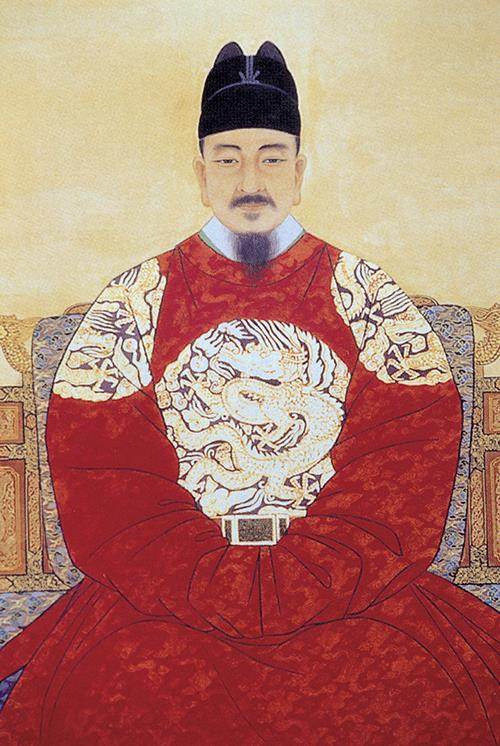

All About King Sejong the Great: The Shining Star of Joseon
King Sejong the Great (世宗大王, May 15, 1397 – May 18, 1450), the fourth monarch of the Joseon Dynasty, is revered as one of the greatest and most respected rulers in Korean history. His reign (1418 – 1450) is considered the golden age of Joseon, marked by remarkable development and innovation in various fields, including politics, economy, society, culture, and science and technology. Let's delve into the details of King Sejong the Great, who solidified the foundation of Joseon and fostered a brilliant culture with his deep love for his people and exceptional leadership.
1. Early Life and Accession to the Throne
Born as the third son of King Taejong and Queen Wongyeong of the Min clan, Sejong's given name was Yi Do (李祹). From a young age, he was intelligent and fond of learning, earning the love of his father, King Taejong. When his elder brother, Crown Prince Yangnyeong, was deposed due to various issues, Yi Do was appointed as the new Crown Prince in August 1418 and ascended to the throne as the 4th King of Joseon at the age of 22. Despite the sudden succession, Sejong quickly stabilized the state affairs with his outstanding abilities and efforts, ushering in his own era.
2. Brilliant Achievements
King Sejong the Great's achievements were truly diverse and innovative, leaving his mark on almost every aspect of the nation.
- ✨ The Noble Love for the People Blossoms into Hangeul: The Beautiful Story of Hunminjeongeum 🌸Hunminjeongeum, shining like the stars in the night sky, was not created overnight. King Sejong, with unwavering determination, led the creation process amidst opposition and difficulties. Late into the night, under the lamplight, he deliberated with scholars of the Jiphyeonjeon (Hall of Worthies, 집현전), repeating countless studies and experiments. Like tending a secret garden, he meticulously and carefully designed and refined each letter. The process was solitary and arduous, but his passionate love for the people became an unyielding force that overcame any obstacle.King Sejong, with great care, ensured that the people could easily understand and use the newly created Hunminjeongeum by ordering the compilation of the Hunminjeongeum Haerye (解例本), a detailed explanation of its purpose, design principles, and usage, and the Hunminjeongeum Eonhae (諺解本), which translated the Haerye into vernacular Korean. These acts serve as significant evidence of his deep care for his people.Hunminjeongeum became more than just a writing system; it became a vessel containing the lives and spirits of the Korean people – the beginning of free communication, the flourishing of national culture, and the root of the national spirit. Recognized for its scientific and original design, the remarkable Hunminjeongeum is now inscribed as a UNESCO Memory of the World heritage, and the UNESCO King Sejong Literacy Prize, established in its honor, supports global efforts in combating illiteracy. All of this is the shining fruition of King Sejong's noble dream for his people.
- The emergence of a new writing system always accompanies change and upheaval. Hunminjeongeum was no exception. The privileged elite who had long monopolized Hanja strongly opposed the appearance of this unfamiliar script. However, King Sejong, with firm belief, dedicated himself to promoting and spreading the value of Hunminjeongeum. Like a tree that firmly takes root amidst harsh winds, Hunminjeongeum gradually permeated the hearts of the people, eventually blossoming into a brilliant national culture.
- Hunminjeongeum is not merely a collection of letters but a work of art created through the scientific analysis of how human voices are produced. The consonants (닿소리) resembling the shape of the mouth are like nature's principles embodied, delicately modeled after the movements of the vocal organs – the mouth, tongue, and throat – when we produce sounds. For instance, 'ㄱ' resembles the root of the tongue blocking the throat, and 'ㄴ' resembles the tip of the tongue touching the upper gums, with the principle of pronunciation embedded within the shape of the letters. The vowels (홀소리), a harmony of heaven, earth, and humanity, begin with three basic shapes symbolizing the fundamental elements of the universe: heaven (ㆍ), earth (ㅡ), and humanity (ㅣ). These simple yet profound basic shapes combine to express a variety of vowel sounds, like seeds blossoming into flowers, showcasing a beautiful harmony where diverse sounds expand from the basic vowels. Furthermore, the square frame containing the sound syllables is a unique characteristic of Hunminjeongeum.
- Tears of the people frustrated by their inability to read, countless stories of suffering endured in silence, lingered in the land of Joseon. In an era where only the privileged elite monopolized knowledge and power by using complex and difficult Hanja (Chinese characters), King Sejong saw through this inequality and darkness, listening to the desperate cries of his people. The deep love for his people (aeminjeongshin, 애민정신) that burned within him eventually led to the noble intention of creating Hunminjeongeum – a ray of light that would illuminate the world. "Because the speech of this country is different from that of China, it is not easy for the uneducated people to express what they want to say. I have created twenty-eight letters, hoping that all people will learn them easily and use them conveniently in their daily lives," reads the preface of Hunminjeongeum, encapsulating King Sejong's profound love and earnest wish for his people.
- Advancement of Science and Technology: King Sejong had a deep interest in the advancement of science and technology and actively supported it.
- Astronomy: Various astronomical observation instruments such as the Honcheonui (armillary sphere), Ganuidae (simplified armillary sphere), Jagyeokru (water clock), and Angbuilgu (sundial) were produced to accurately measure time and seasons, aiding the lives of the people. In particular, he appointed talented scientists like Jang Yeong-sil, leading the development of science and technology.
- Meteorology: The Cheugugi (rain gauge) was invented to scientifically measure rainfall and utilize it in agriculture, a remarkable achievement for its time worldwide.
- Cartography: Jeong Cheok and Yang Seong-ji were commissioned to create the Paldo Do (Map of the Eight Provinces), an accurate map of Korea reflecting its actual conditions.
- Weapon Development: Various firearms such as the Hwacha (multiple rocket launcher) and Singijeon (fire arrow rocket) were developed, strengthening national defense.
- Agricultural Development: Efforts were made to improve agricultural development, which was crucial for the stability of the people's lives.
- Compilation of Agricultural Texts: The Nongsa Jikseol (Direct Instructions on Farming), an agricultural text compiling farming techniques and experiences, was compiled and distributed nationwide, greatly contributing to the people learning new farming techniques and increasing production.
- Expansion of Irrigation Facilities: Efforts were made to expand irrigation facilities such as building reservoirs and repairing waterways, reducing damage from droughts and floods and enabling stable agricultural production.
- Legal and Institutional Reforms: Laws and institutions were reformed for fair and efficient social management.
- Improvement of the Penal System: Emphasis was placed on careful trials to prevent innocent people from being wronged, and the penal system was improved.
- Compilation of Customary Law: The customary laws of Joseon were systematically compiled, laying the foundation for the rule of law.
- Promotion of Literature and Arts: Academic research and the development of culture and arts were actively supported.
- Establishment of the Jiphyeonjeon (Hall of Worthies): The Jiphyeonjeon, an academic research institution, was established to nurture young and talented scholars and promote academic research. Various scholarly research and book compilations, including the creation of Hunminjeongeum, took place here.
- Compilation of Books: Efforts were made to disseminate knowledge by compiling and publishing books in various fields such as Confucian classics, history books, and medical texts. Representative works include the Goryeosa (History of Goryeo) and Euibangyuchwi (Classified Collection of Medical Prescriptions).
- Development of Music: Park Yeon was appointed to organize and develop the music of Joseon.
- Strengthening National Defense: National defense was strengthened to prepare for invasions by northern tribes and protect the safety of the people.
- Establishment of the Four Forts and Six Garrisons: Generals Choe Yun-deok and Kim Jong-seo were dispatched to establish the Four Forts and Six Garrisons along the Amnokgang (Yalu River) and Tumen River, expanding the northern territory.
- Suppression of the Jurchen People: The Jurchen people were suppressed, securing stability in the border regions.
3. Character and Leadership
King Sejong the Great was a monarch with a profound love for his people (aeminjeongshin). He always prioritized the difficulties of the people and constantly strove to improve their lives. Furthermore, with exceptional leadership, he listened to the opinions of his officials and harmoniously managed state affairs, appointing talented individuals to appropriate positions regardless of their social status. His open-minded attitude, which encouraged learning and debate, greatly contributed to raising the intellectual level of Joseon society.
4. Limitations and Challenges of Achievements
While King Sejong the Great's achievements were remarkable, there were also social limitations and challenges of the time. The lives of the common people did not achieve complete equality within the hierarchical society centered on the yangban (scholar-officials), and constant preparation against external threats was necessary. However, King Sejong greatly developed Joseon society through his continuous efforts and innovative policies despite these limitations.
5. Death and Legacy
King Sejong the Great passed away on May 18, 1450, at the age of 54. His death brought grief to the entire nation, and his achievements have been remembered for posterity. King Sejong the Great is revered as one of the most respected monarchs in Korean history, and his love for his people and innovative achievements continue to inspire us today. In recognition of his contribution to cultural development through the creation of Hangeul, UNESCO established the King Sejong Literacy Prize to honor individuals or organizations that have contributed to the eradication of illiteracy.
Conclusion
King Sejong the Great was a great monarch who led the golden age of Joseon with his outstanding wisdom and love for his people. His achievements transcend time and hold great significance for us today, and his spirit will forever live in our hearts. While it may be difficult to find specific places in Busan that commemorate King Sejong the Great's achievements, his spirit and legacy will forever shine in Korean history.